Most confusion in heron identification comes down to two questions: how big is the bird, and what colour is its bill? Everything else — feet, neck, flight style, habitat — is a tiebreaker. Get the scale and the bill right and the rest tends to fall into place.
Four species cover most of what you will meet in Britain. The grey heron is the bird you already know, whether or not you have noticed it. The little egret is a small white heron with a black bill and yellow feet. The great white egret is a big white heron with a yellow bill and black feet. The bittern is a brown, streaky, deeply secretive reedbed specialist that most people hear long before they see. Here is how to tell them apart without standing there guessing.
Use the grey heron as your ruler, because it is the one you will have seen most often. A little egret stands roughly two-thirds of a grey heron's height and looks far more slender, almost delicate. A great white egret is very nearly heron-sized, which is exactly why raw size alone trips people up at long range. A bittern is somewhere between the two in height but looks much heavier, with a hunched, pot-bellied outline, broad shoulders and a head that seems to sit straight on the body.
Judging size across water is unreliable. A bird on the far side of a reservoir can look enormous; the same bird twenty metres away looks modest. Compare your bird with something fixed rather than trusting your instinct. A mallard, a mute swan, a fence post or a cow in the next field all give you a scale you can carry in your head. A white heron standing near a mallard and barely taller is a little egret. A white heron that overtops a grazing sheep is a great white egret.
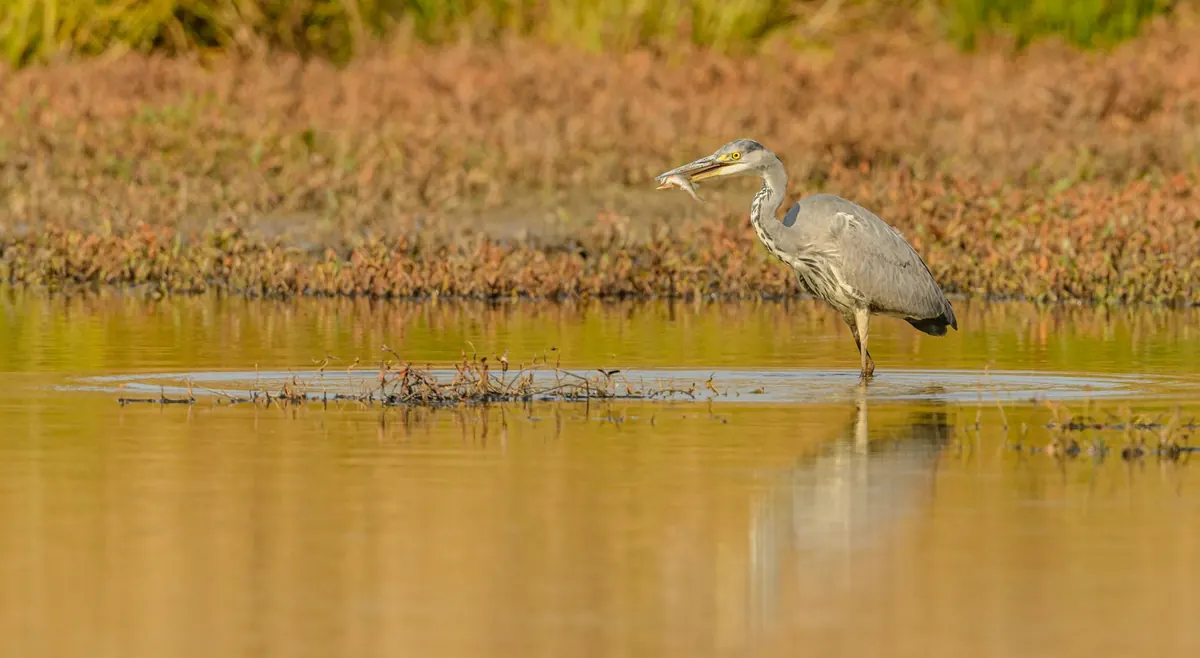
Grey wings and back, a white head and neck, and a black stripe running from the eye to the back of the head, where it ends in a dark drooping plume. Down the front of the neck you will see broken black streaks that make a kind of dotted line. The bill is a heavy yellowish dagger, and the legs are dull brownish-yellow. Young birds in their first year look scruffier and duller, with a greyer crown and no long nape plume.
Behaviour is a giveaway. Grey herons hunt by standing still for long stretches, then stalking forward with a slow, deliberate step before striking. They eat fish, amphibians, small mammals and the occasional duckling, and they will happily take goldfish from a garden pond, which is why so many people meet their first heron over their own lawn. They are mostly solitary feeders but gather at communal roosts and nest in colonies known as heronries, usually high in trees.
All white, with a black bill, black legs and — the mark everyone remembers — bright yellow feet, the classic golden slippers. In breeding condition, adults grow long loose plumes from the nape and back, and the bare skin around the eye can flush pinkish or red, but the bill stays black. Little egrets feed more actively than grey herons: shuffling their feet to stir up prey, running a few quick steps, half-opening their wings to startle small fish into moving.
They are often sociable, sometimes several together, and they are just as at home on an estuary or coastal lagoon as on an inland river or lake. Having spread northwards across Britain over recent decades, they are now a familiar sight on many southern and eastern coasts — a good example of how quickly a national picture can change.
Picture a little egret blown up to grey heron size and given a yellow bill and black feet, and you are most of the way there. The neck is long and often held with an obvious kink, which makes the bird look snake-like as it stalks. One useful clincher: the gape line, the corner of the mouth, extends back beyond the eye on a great white egret, whereas on a little egret it stops around the level of the eye. Breeding birds grow long plumes over the back and the bill may darken, so do not rely on yellow alone.
Great white egrets are slower and more stately than little egrets when feeding, and they are increasingly recorded here, particularly in winter on flooded fields, marshes and reservoir edges. They now breed in Britain in small numbers, so a big white heron inland is no longer the shock it once was.
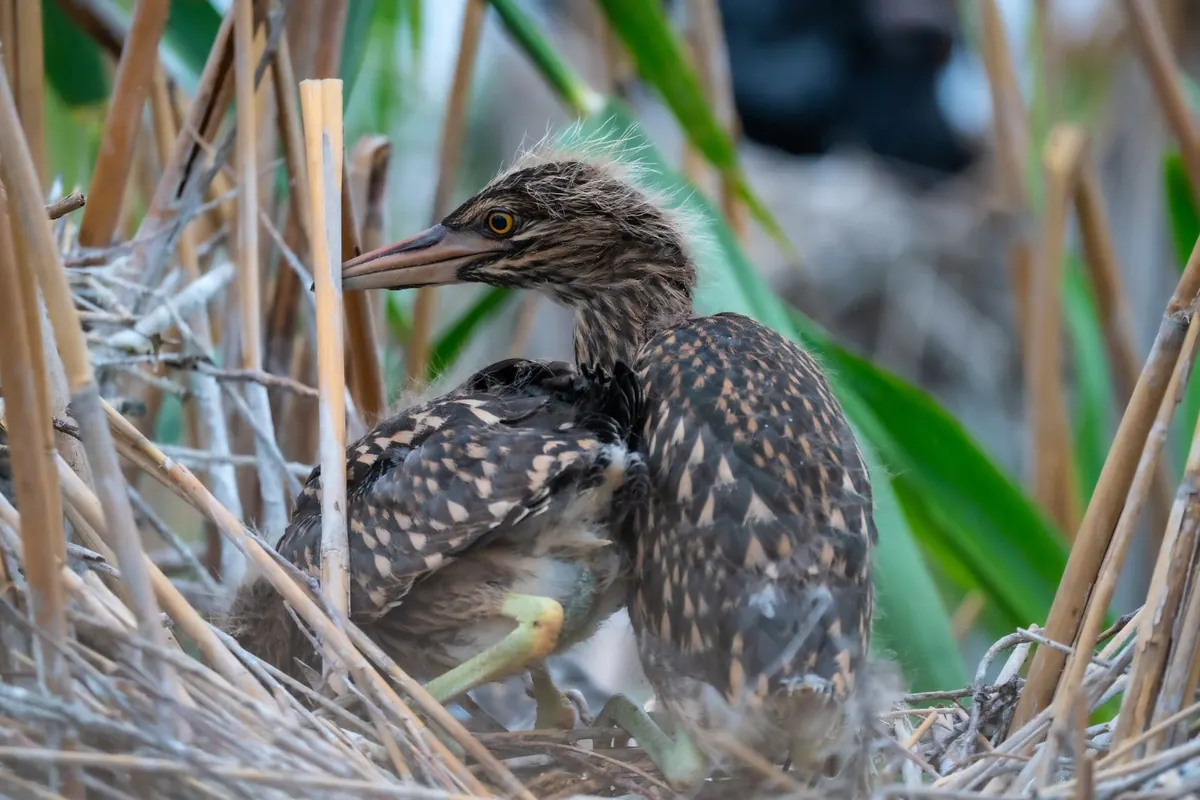
Forget white entirely. A bittern is warm brown, buff and black, heavily streaked and barred so that it disappears into a reedbed. The legs are greenish-yellow, the bill a stout dagger, and the eye sits high, giving it a permanently suspicious look. The plumage is the point: when a bittern is alarmed it freezes with its bill pointing straight up, and the vertical streaks along the neck and breast line up with the reeds around it. Looking for a brown bird in a reedbed is often hopeless; looking for a reed that has suddenly grown a beak is the trick.
Most encounters are auditory. In spring, males produce a deep booming call, a low resonant note like someone blowing across the neck of a bottle, carrying a long way across marshland. Bitterns are rare and local, with strongholds in the Norfolk Broads, the Somerset Levels and parts of eastern England, and winter cold snaps can push them to the edges of reeds where they are briefly visible.
Once a bird is in the air, stop looking at plumage and look at the neck. Every heron and egret flies with the neck folded back into a compact S, which makes the head look as though it is resting on the shoulders. Storks, cranes and spoonbills fly with the neck stretched out in front of them, so a big white bird with an extended neck and a flattened, spoon-shaped bill is a spoonbill, not an egret. Cormorants also fly with the neck out, and they dive.
A grey heron often calls as it flies, a harsh scraping fraaank, which will tell you what it is before you have focused on it.
Where you are standing matters as much as what you are looking at. Grey herons turn up almost anywhere with water and fish, including park lakes, canals, estuaries, wet meadows and garden ponds. Little egrets favour coasts and estuaries, though inland records are routine now. Great white egrets are most often found on larger wetlands, flooded fields and reservoirs, and are commonest in winter. Bitterns are reedbed birds, full stop; a brown streaked heron standing in open water or on a beach is far more likely to be a young grey heron.
Write down what you saw and where, and go back to the same spot through the year. Familiarity with one local heron does more for your identification skills than a dozen distant ticks on a list.
Photo: Petr Ganaj / Pexels
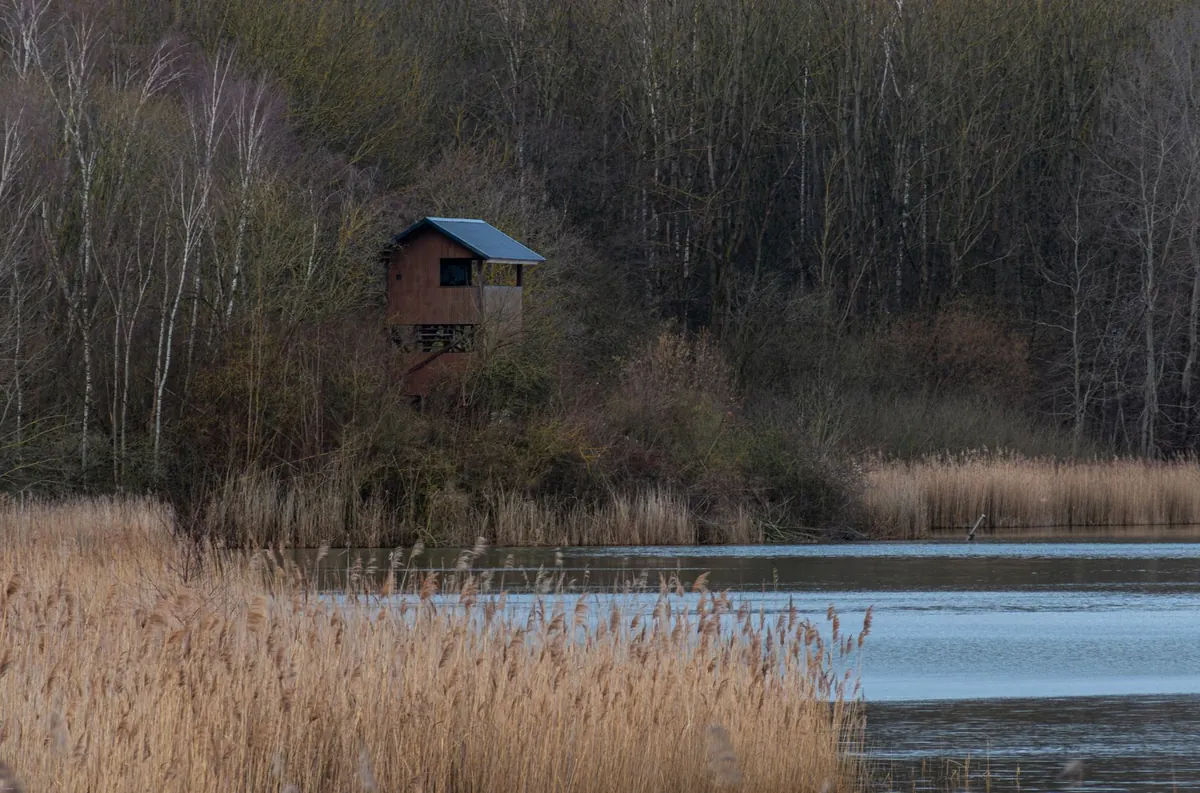
A practical, ethics-first guide to ten UK wetlands where grey herons, little egrets and bitterns can be watched...

A practical, standardised checklist for recording heron behaviour — from foraging strikes to dusk roost counts — so...
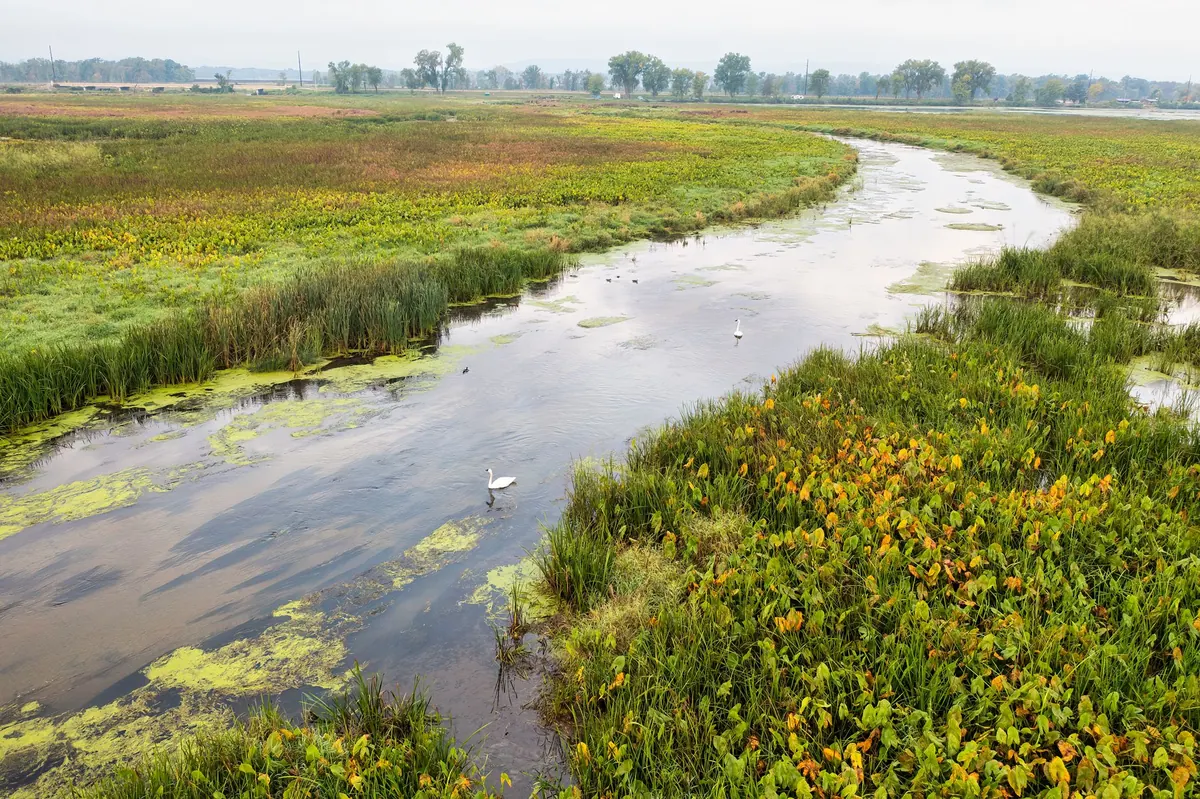
Restored wetlands across the UK reveal what long-term heron counts can show — where conservation is working, where...

Exploring herons, wetlands, and wild science..
